Project manager vs. Product Owner: the role, the difference and the importance
Get answers to the 4 most frequently asked questions about Project Managers and Product Owners
- Article
- Product & Project Management


In the world of project management and product development, the terms Project Manager and Product Owner often come up. While they may appear to share similar responsibilities in some cases, each plays a distinct role within a project or product development process. A Project Manager is certainly not a Product Owner, and vice versa. It is essential to understand the difference between these two roles and why they must be applied appropriately. In this article, you’ll learn how a Project Manager and a Product Owner differ, what their responsibilities are, and how to choose the right person to make your project or product a success.
What is a Project Manager?
A Project Manager is responsible for the overall planning, execution, monitoring, and completion of a project. The focus lies on managing time, cost, and scope, with the goal of completing the project within the defined parameters. Project Managers often work according to specific methodologies, such as the waterfall method or agile frameworks, depending on the type of project.
Core responsibilities of a Project Manager:
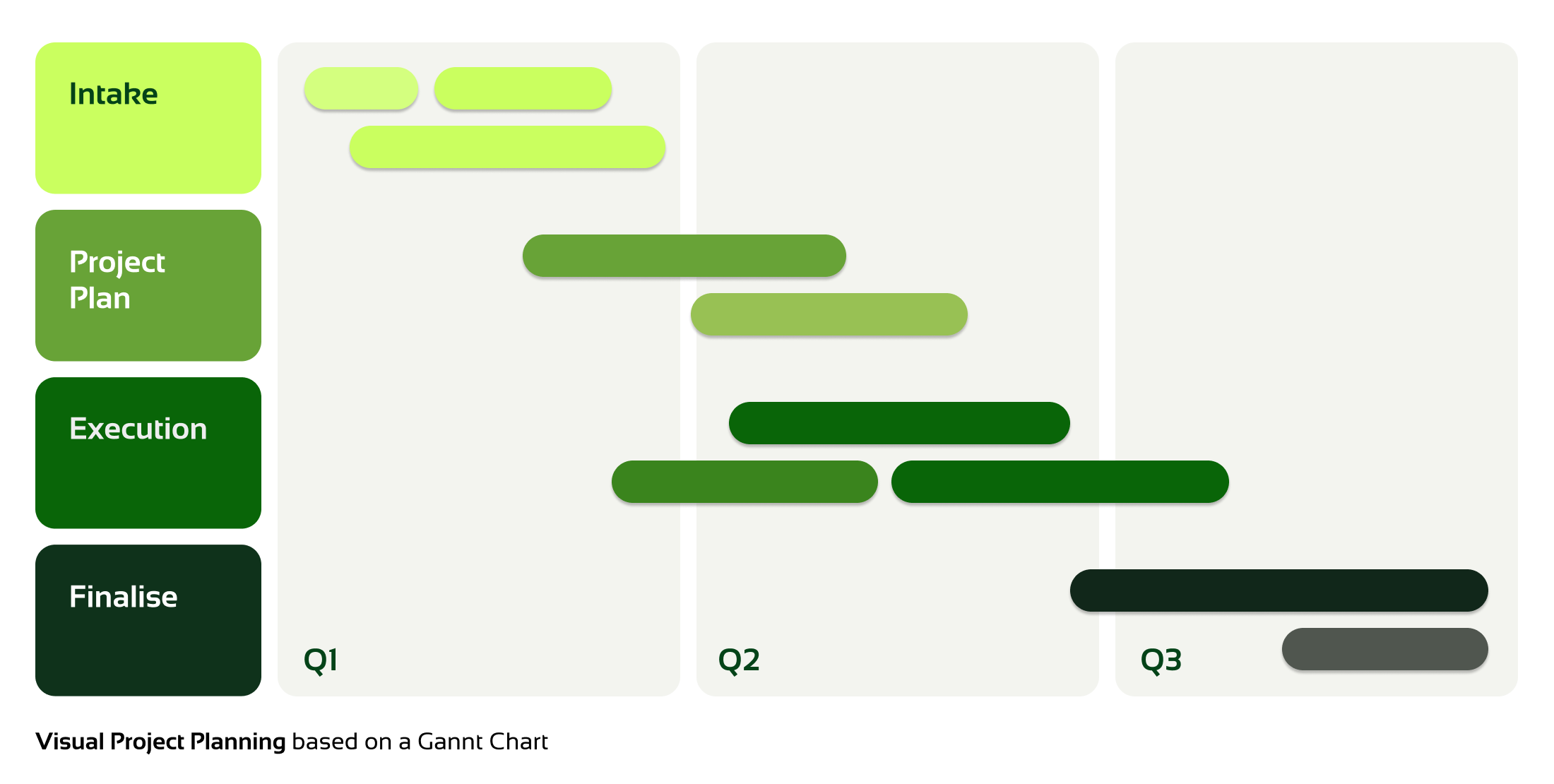
- Planning and coordination: Creating a detailed project plan including a project charter and coordinating the necessary resources. Using a Gantt chart is recommended for planning purposes. A Product Owner is less likely to use this, as they typically work in short cycles (sprints).
- Budget management: Monitoring costs and ensuring the project remains within budget.
- Risk management: Identifying and mitigating risks that may impact the project.
- Communication: Acting as the main point of contact for stakeholders and team members.
- Team leadership: Inspiring and motivating the project team, while ensuring smooth collaboration.
What is a Product Owner?
The Product Owner, a role common in agile frameworks such as Scrum, is primarily responsible for the content and direction of the product. Unlike the Project Manager, who focuses on the execution of the project, the Product Owner is concerned with defining the product vision, setting priorities, and ensuring the quality of the end result.
Core responsibilities of a Product Owner:
- Value creation: Ensuring maximum value is delivered to both the customer and the business with each new product release. This is the core task of a Product Owner.
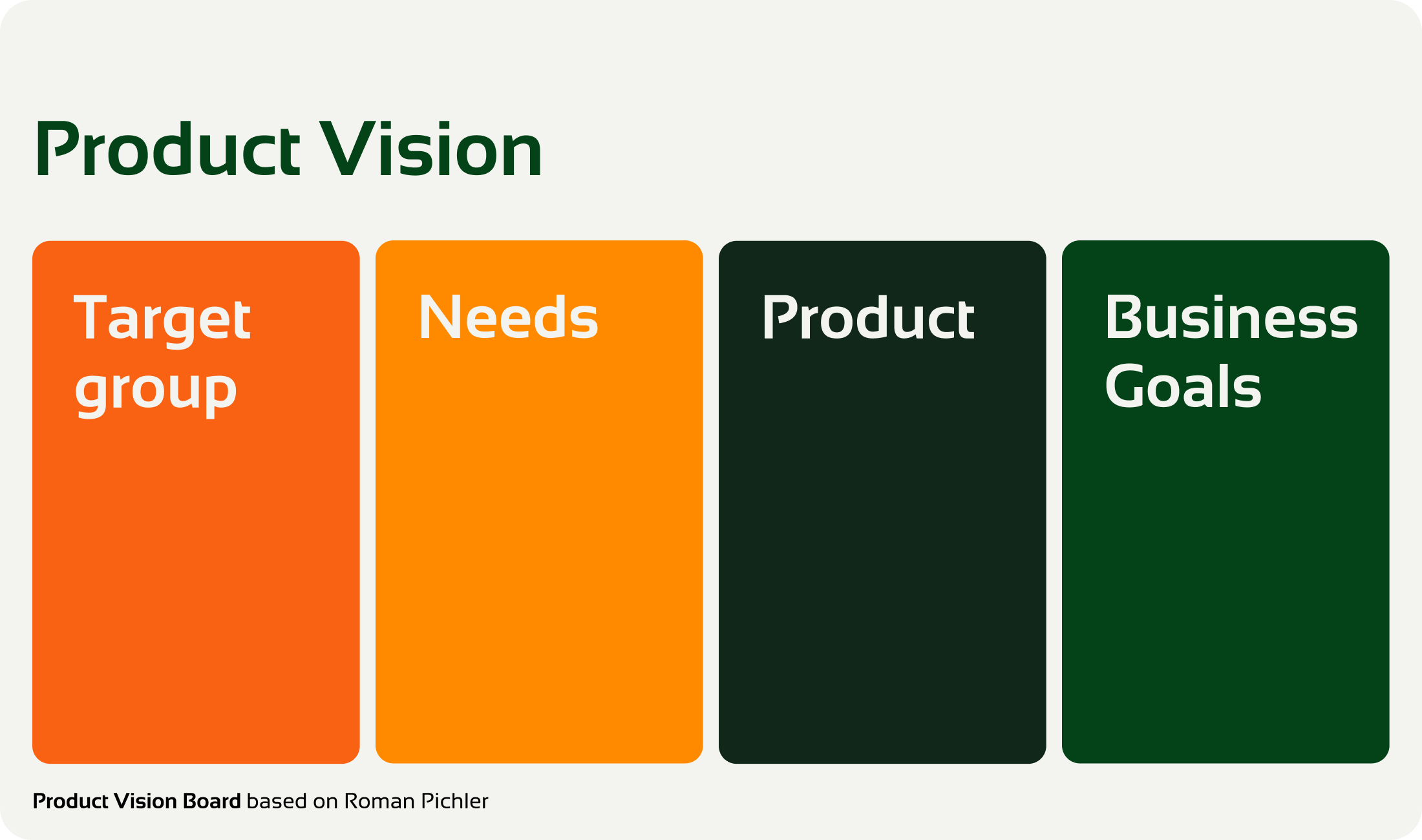
- Vision and strategy: Defining and communicating the product vision and strategy to the team. Using tools like Roman Pichler’s Product Vision Board is a strong way to communicate this.
- Backlog management: Creating, prioritising, and managing the product backlog (a list of product features and improvements).
- Stakeholder management: Maintaining contact with internal and external stakeholders and translating their needs into product requirements.
- Quality assurance: Ensuring the final product solution meets customer expectations and company quality standards (Definition of Done).
A strong Definition of Done (DoD) meets the following criteria:
- Clear and measurable – No room for interpretation; concrete, understandable criteria.
- Transparent – The entire team knows the DoD and works towards it together.
- Customer value – The criteria ensure a usable and valuable end product.
- Technically complete – Fully tested, integrated, and free of bugs or incomplete components.
- Quality assured – The feature has been reviewed, tests have passed, and documentation is up to date.
What’s the difference between a Project Manager and a Product Owner?
Although the roles of Project Manager and Product Owner can overlap, there are some key differences in focus and responsibility:
1. Process vs Product Focus
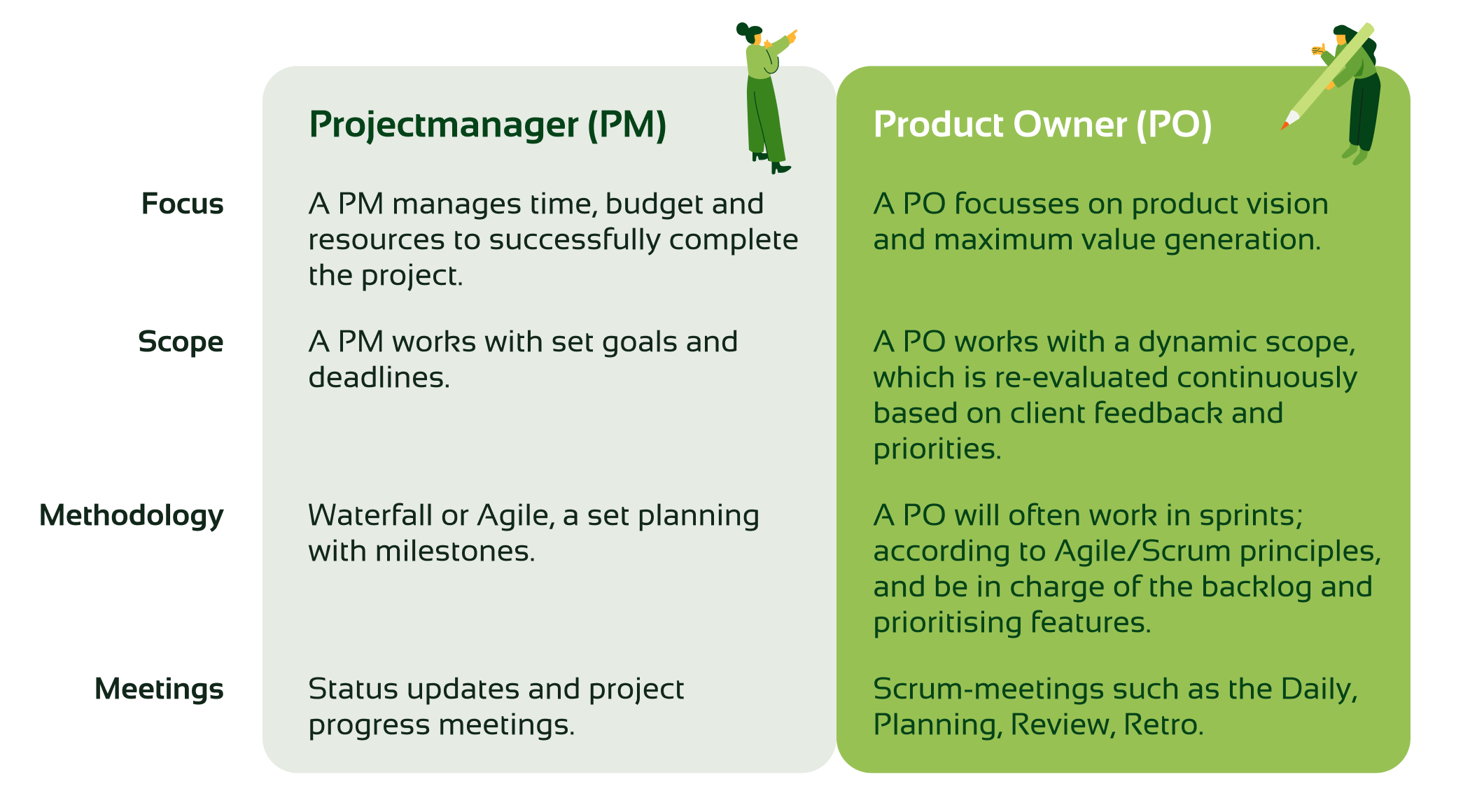
- A Project Manager focuses on the process of executing the project, including managing time, budget, and resources. Projects are typically finite.
- A Product Owner focuses on the product itself, guarding the product vision, integrating stakeholder needs, and maximising the value of the end result.
2. Scope
- The Project Manager ensures that the project meets its intended objectives, with a focus on staying within scope and meeting deadlines.
- The Product Owner ensures the right products or features are delivered and aligned with customer needs and business goals.
3. Way of working
- A Project Manager may work using various approaches. These range from the traditional waterfall method (where requirements are fixed from the start) to agile project management, where the scope and requirements may evolve with each phase.
- Product Owners typically work in an agile way (specifically Scrum), collaborating with the team in 1–4 week sprints. This includes regular ceremonies like Daily Scrums, Sprint Planning, Sprint Reviews, and Retrospectives — methods that Project Managers don’t usually follow.
- The tools each role uses often match their ways of working, such as JIRA, Azure DevOps, or Microsoft Project.
- Project Managers maintain oversight and ensure everything runs smoothly — within scope, time, and budget. They plan, organise, and monitor progress with tools like Microsoft Project, Monday, or Smartsheet.
- Product Owners look beyond planning. They define product strategy, manage the backlog, and work closely with stakeholders to deliver maximum value. Common tools include Jira, Confluence, and Azure DevOps.
Why are both roles important for project or product success?
Having both a Project Manager and a Product Owner can be key to the success of your project or product. Each role brings essential value and expertise:
- Efficiency and effectiveness: The Project Manager provides structure and manages the execution, ensuring delivery on time and within budget. The Product Owner ensures the right features are delivered at the right moment, increasing product value.
- Balance between planning and customer value: The Project Manager focuses on the process, while the Product Owner ensures that what is delivered truly meets the customer's needs. Together, they help keep the project on time and aligned with market relevance.
- Agility in dynamic environments: In agile environments, requirements and priorities can change over time. The Product Owner keeps the product valuable, while the Project Manager ensures these changes remain manageable within project scope.
Creating value? A Project Manager and Product Owner both do it from their own unique perspective.
While the roles of Project Manager and Product Owner can sometimes be confusing, they both play a crucial role in the success of a project or product development. The Project Manager focuses on process and execution, while the Product Owner shapes the product and maximises customer value. By clearly understanding and assigning these roles, organisations can manage their projects and products more effectively and deliver value on both a process and product level.
It's also important to realise that both roles are not always needed at the same time, quite the opposite! Depending on your specific needs and situation, one role might be a better fit than the other. If you’re unsure, our sales team or consultants are happy to think along with you.
At Digital Power, we invest in both Project Management and Product Owner training, ensuring our consultants understand which skills, knowledge and methods to apply in each role. In client projects, we’ve seen how important it is to match the right consultant to the situation, the role, and the organisation to achieve the best results.
This is an article by Leon Kooijman
Leon Kooijman is an experienced Product and Project Manager with a background in the retail, energy, and airline industries. He is results-oriented, people-focused, and skilled at bringing structure to fast-paced, complex environments. Leon also values a positive team culture and believes that a sense of fun is key to building strong, collaborative teams.
This article is co-written by Andjalie Panday
Andjalie Panday is a Product Owner at Digital Power. She has experience in process automation, digital transformation, and system integrations within complex infrastructures. With a structured and calm approach, she helps teams deliver complex projects successfully

Receive data insights, use cases and behind-the-scenes peeks once a month?
Sign up for our email list and stay 'up to data':