How the Analytics Translator brings data and business closer together
What is the role of an Analytics Translator?
- Article
- Product & Project Management
- Data Analytics


In many organisations, there is still a gap between the technical teams and the business. Data scientists and engineers build sophisticated models, while the business requires concrete insights that help make better decisions. The person who brings those worlds together? The Analytics Translator.
What does an Analytics Translator do?
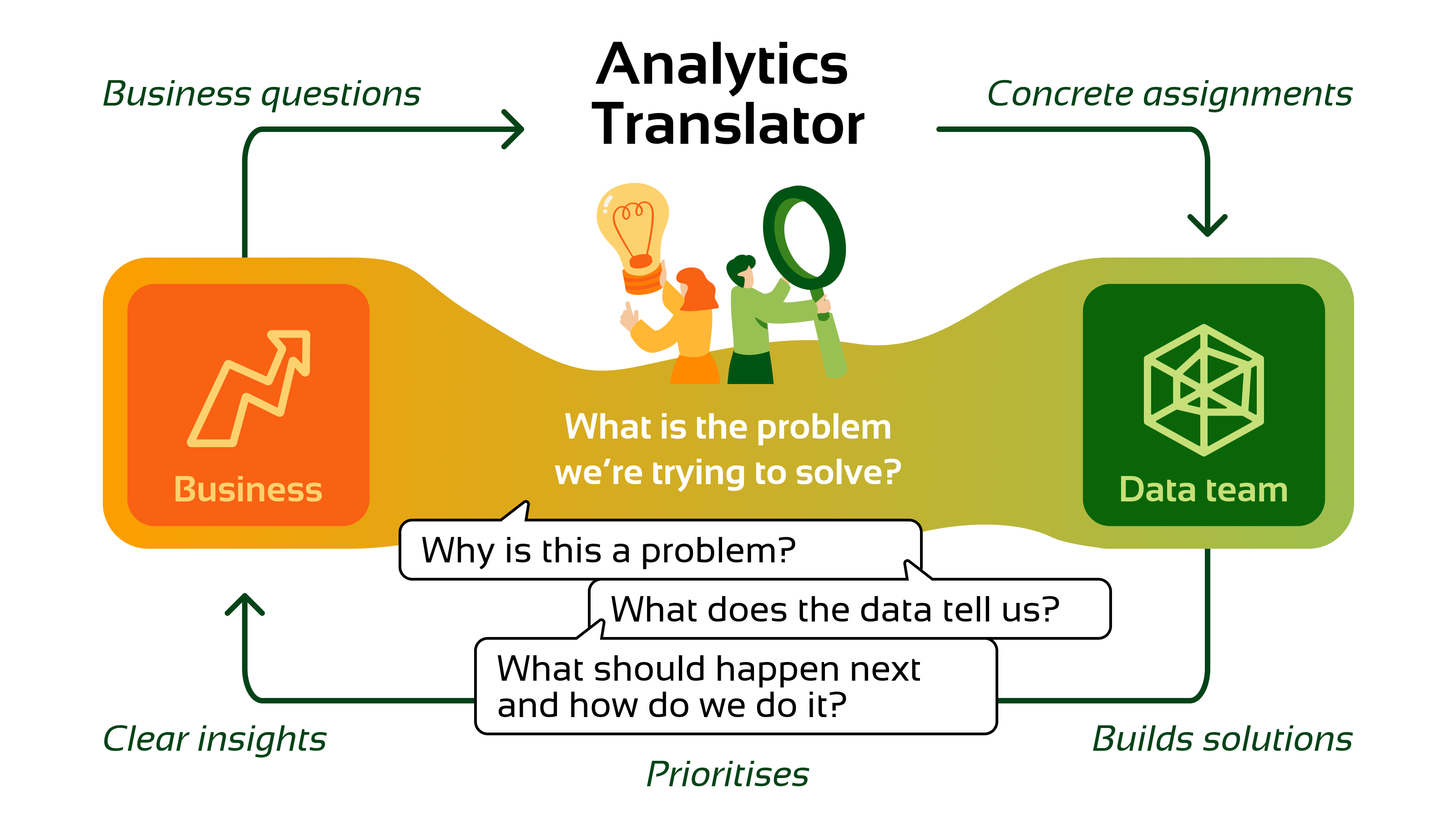
At Digital Power, we see daily how important this role is. The Analytics Translator understands both the technical side of data and the business context. This means that you don’t just see what’s happening in the data, but also understand why it’s relevant to the organisation: which goals teams are striving for, which processes are causing bottlenecks, which KPIs truly matter, and which questions the business wants answered.
By combining data insight with business understanding, this role ensures that data-driven initiatives, from dashboards to AI models, don’t remain just ideas, but deliver real value for the organisation.
Ask the right questions
The Analytics Translator translates ideas from the business into concrete action points for the technical teams. It’s important that the right questions are answered:
- What exactly is the problem we want to solve?
- Why is this a problem, and what can be improved?
- What does the data tell us about this?
- Which solution is the best fit: a report, dashboard, model, or something else?
- What needs to happen next, how do we approach it, and who do we need to involve?
The Analytics Translator not only ensures that the technical teams know what they need to build, but also that the results and insights are clearly translated back to the business: what has been done, why, what the data says, and what is expected from the business.
This continuous translation in both directions leads to faster and better collaboration between teams, clearer roadmaps, and projects that align more closely with organisational goals. Ultimately, this results in tangible, measurable outcomes.
The value of an Analytics Translator
Having an Analytics Translator in your organisation means:
- Less duplication of effort and more standardisation, as the Translator has the overall view
- Better collaboration between data and business teams, as they understand each other more effectively
- Clear prioritisation based on business impact
- Awareness of privacy and security in every initiative
- Faster implementation of solutions that truly add value
By maintaining an overview of all ongoing data initiatives, the Analytics Translator ensures that each project contributes to the broader strategy and that existing solutions are fully optimised.
A role with a future
As organisations work more with data, the role of the Analytics Translator becomes even more important. This bridging role fosters better collaboration, greater insight, and more return from data at every level of the organisation.
This is an article by Michelle Gijsberts, Data Analyst at Digital Power
Michelle is a Data Analyst at Digital Power who focuses on uncovering the question behind the question. Through advanced analysis, she extracts insights from data that are not immediately visible and translates them into actionable recommendations.
Team Lead Data Analyticsmichelle.gijsberts@digital-power.com
Receive data insights, use cases and behind-the-scenes peeks once a month?
Sign up for our email list and stay 'up to data':