Customisation in the data domain
An interview with our CEO & Teamlead Data Analytics
- Podcast
- Our approach
- Working at
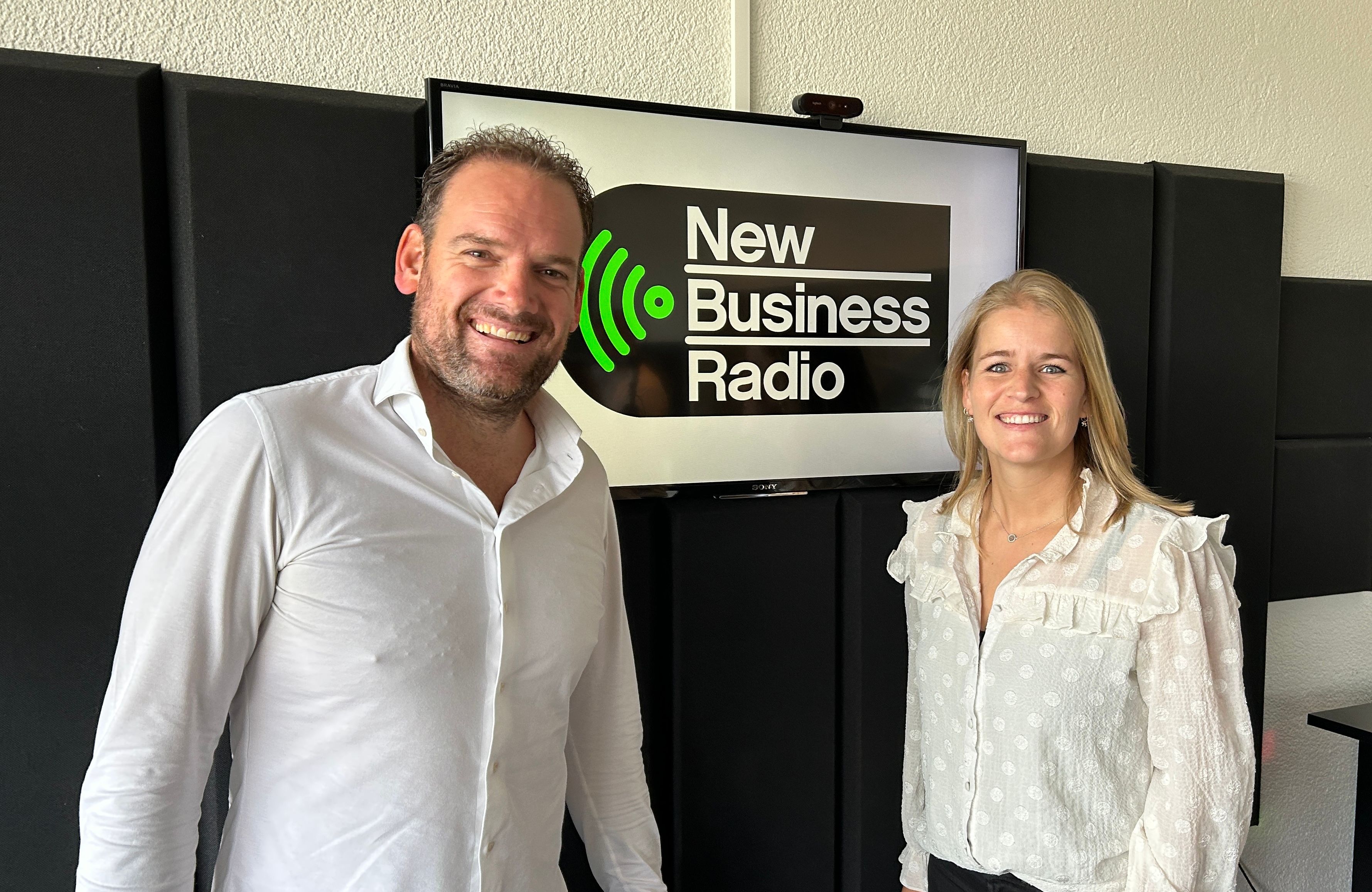
In this episode of New Business Radio's Let's Talk Business, our CEO René de Boer and Teamlead Data Analytics Nienke Halma talk about our vision and approach.
The podcast is offline, but you can still read what was discussed below.
What made you decide to start your own business?
René: I was never really born an entrepreneur. What I learnt at my previous company is that you can do very fat things if you put people at the centre of the organisation. This changed at my previous company. This is where my urge to start for myself came from. I wanted to build a company with a very strong culture, where people are really central. With this, we make an impact for our customers.
Why did you decide to move away from civil engineering and take over an IT company?
René: The first reason is actually a very practical one, which is that I had a non-compete clause. And secondly, I was looking for a new market that was developing rapidly. I started looking for companies that already had a base and that I could make nicer. Then my business partner and I talked to 5-6 companies and eventually Digital Power came out of that. We saw music in this.
You have set up a STAK, what does it bring you?
René: A lot of involvement from people. Of course, you buy a share when you become a STAK member, so then you automatically own a piece of the company.
What does the Team Lead Data Analytics job entail?
Nienke: It's a role that was created a year ago. As we got bigger and bigger, we noticed that it became more difficult to keep a close eye on individuals. Our Operations Manager was responsible for almost 120 consultants. An extra layer was needed, so we started Teamleads. They approach colleagues proactively to ask how they are doing with work, but also privately.
Why do you use the role Teamlead and not Team Manager?
Nienke: We very much believe in working on the company together. As soon as you hear the word Manager, you immediately think of someone higher up in the hierarchy. We see it that we do it together and that I just have a different role than, for example, the consultants in my team.
And how many people do you have in your team?
Nienke: In my team, there are 15 consultants. And we have 9 team leads who all have about 10 to 15 consultants in their team.
What state was Digital Power in when you took over René?
René: In the start-up phase. There were 18 people working there then. We grew by hiring the right people and the right customers. Fortunately, there was a very nice base on which we could move forward.
And what I think also goes with IT people is that they like to set their own working hours. Do you recognise that René?
René: Basically, you could say that, but I think we have hired a lot of people who are not like that. We have flexible working hours, between 7am and 9pm. So we have agreed that you do have to be available to the customer and coordinate it with the customer, but then you can arrange it yourself.
Recently, we have also allowed people to work from abroad. The other day we had a colleague who started working from Japan. She was able to arrange it well with the customer.
What do you mean by 'entrepreneurship with care'?
René: For me, that is paying the right attention to our people. As a result, our people in turn pay the right attention to our customers. And if someone has challenges, we cannot expect someone to perform well. So really paying attention to people.
When do you join Digital Power as a company?
Nienke: Sometimes people are inspired by our website and other times we meet them through a trade fair. These people are then already really looking for a company that can provide a solution to their data question. What you also often see is that there are developments in the market that make people think, 'oh dear, we need to get started!'
If you want to start making your decisions from data, do you have to do it from the beginning? Or can you do it later?
René: It doesn't necessarily have to be from the start anyway. A lot of the clients we work for now are clients with a long history. They have worked with numbers differently in the past than they do now. Now they really want to optimise.
It very much depends on the business in what way. For example, we are in insurance a lot. What you see now is that health insurance is going up very sharply. That will trigger a lot. So health insurers are looking at what is happening online with current customers and potential customers. They are trying to track those well because they want to have good insight into what customers are doing. For example, if a customer has called customer service three times, that might be an indicator that that person could start switching.
We also have a large dairy supplier as a customer and they have a completely different question. For example, they want to know how much milk they get in from farmers each day. And the better they can predict that, the better they can adjust production accordingly.
Because then it is a matter of the longer you check data, the easier it is to interpret the data?
Nienke: Actually, not necessarily. We also help organisations with their data strategy and its implementation. With a data strategy, you make sure you use data that matches your business goals. This is very important to ensure that you are steering on the right data.
What you sometimes see in practice is that different departments use different definitions of certain data. And that they therefore get stuck on the quality of the data. We also help companies improve their data quality.
What mistakes do entrepreneurs make in this?
They think it's easy. That is a giant misstep. Often the hardest part is not even picking up the insights, but rather what an organisation should do with them next. How are you going to look at your work differently as an organisation?
Listen for more!
Curious about the moments René is most proud of or the things he learned from entrepreneurship? Listen to the full podcast (in Dutch).
This is an interview with René de Boer, CEO, Digital Power
As CEO, René is responsible for the day-to-day management of Digital Power. He plays a connecting role within and outside the organisation. As a spider in the web, he is a team player who ensures an optimal working environment in which we can do challenging projects together, with the right focus on the development of individuals and our organisation.
Receive data insights, use cases and behind-the-scenes peeks once a month?
Sign up for our email list and stay 'up to data':