I have a lot of data, what is the first step?
- Article
- Our approach


Would you like to get value from your data, but don't know where to start? In this article you will read how to get started, step by step, to extract insights from your data that will help you seize opportunities and tap into your organisation's growth potential.
1. Establish clear organisational objectives
Data can help to achieve your organisational objectives.As such, the first step is to clarify the organisational objectives. Think of 'what do you want to achieve in the coming years' or 'how do you want to grow in the coming months'? Consequently, you can have organisational objectives for different time periods. However, regardless of which time period is attached to your objective(s), make sure they are SMART.
SMART objectives make vague wishes concrete and measurable. SMART stands for:
- Specific: describe what you concretely want to achieve with your objective
- Measurable: link numbers to your objectives, such as: turnover, profit, transactions and sales.
- Acceptable: create support among stakeholders
- Realistic: provide achievable objectives
- Time: indicate when or in which time period you want the objective to be achieved
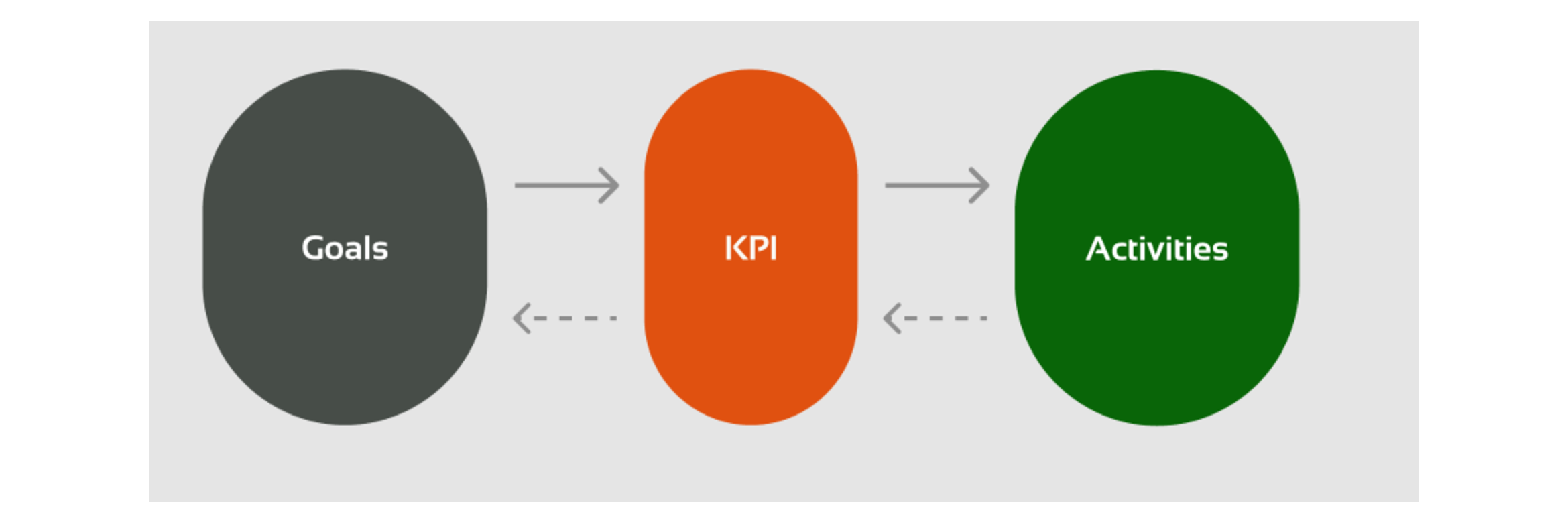
Organisational objectives involve variables or measures to analyse organisational performance.Key Performance Indicators (KPIs) are quantitative and are expressed in a number, related to the target.
Using the KPI framework below, we can work with you to clarify objectives and KPIs.
2. Determine how data adds value to achieving organisational objectives
Using the KPIs, determine what data you need to make your objectives measurable. Examples of different types of data include: financial data, marketing data, sensor data, offline data and logistics data.
Using our KPI framework, we can determine together which data is of added value to your organisation.
3. Make the data available
There are several tools available to make your data findable and available. Your choice of tools depends on the types of data you have and the objectives you want to achieve.
If you are unable to resolve this, we can always help you to store the data correctly so that you have access to your data.
4. Determine in which form you want to use the data
Once the data is available, you have to decide how you want to use it. So determine in what form you want to have access to the data. Examples of commonly used formats include: dashboards, Excel sheets and presentations.
Our Data Analysts are happy to help you make the data usable and make it available in the right format.
5. Ensure support within the organisation
Did you follow the steps above? Then your data is ready to go! It is extremely important that there is support within the organisation. Ultimately, data only adds value if employees actually use and gain insights from it . It is therefore important that employees understand the added value of data: from data to action.
Would you like to share your enthusiasm for data with your colleagues? We are happy to help you in the form of a training or inspiration session.
Future: are there more (external) data sources that can add value?
Do you want to take the next steps in your data-driven maturity? Then you can get insights from more and more data sources. For example, are you listed on other websites? Or do you want to link weather data to your organisation? Then you can also make these data sources available for analysis!
Considering working with us? Contact one of our Business Managers or read the article about our sales process! Read it here.
Wondering what we can do for you?
Reimer is happy to talk to you about your challenges, wishes and opportunities.
Commercieel Manager Data Analytics+31(0)20 308 43 90+31(0)6 83 69 07 78reimer.vandepol@digital-power.com
Receive data insights, case studies and behind-the-scenes peeks once a month?
Sign up for our email list and stay 'up to data':