What is data governance?
An overview of the crucial components of data governance
- Article
- Data Engineering
- Data governance


As the usage of data in organisations becomes ubiquitous, the need to keep control over your data is becoming increasingly important. Gaining control over your data is achieved through effective data governance. However, many people struggle to figure out what data governance encompasses exactly and how to start implementing this at their organisation. This article aims to give you an overview of the crucial components of data governance and how to introduce them at your organisation.
Tip: if you prefer videos over text, we have also hosted a webinar on data governance!
Pillars of data governance
There are three main pillars of data governance that together form the framework for managing ownership and control over data in an organisation. These are Policies, Roles and Responsibilities, and Processes.
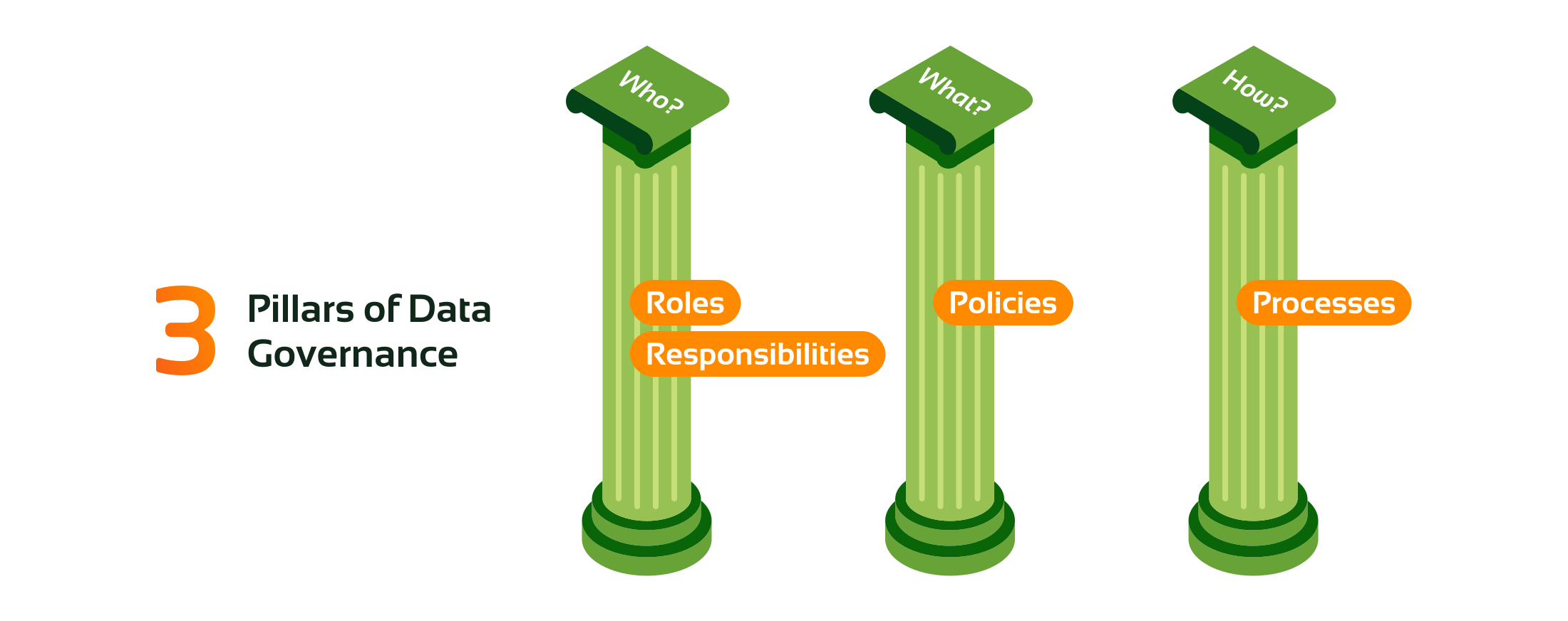
Policies
“What”
Policies are the rules that an organization establishes to govern its data. There is no sense in defining policies without having a solid business justification for them; therefore, your data governance policies should be informed by your data strategy. For instance, the level of data quality required in a dataset should reflectthe importance and value of the data in your company processes. Any policy that is defined should have a clear business value that it provides, and should be approved by the Data Governance Council.
Roles and responsibilities
“Who”
There should be a clear definition of who carries which responsibility within your data governance framework. Roles and responsibilities cover which roles need to be defined within your data governance initiative and what the expectations of each of these roles are.
The exact roles will depend on the size and structure of your organisation, but at a minimum these roles would be expected:
- Data Governance Officer: responsible for designing and maintaining the data governance framework and taking the organisation along in the data governance journey
- Data Governance Council: a board of executives from across the organisation that has ownership over data governance and makes decisions when discussion points come up
- Data Owners: have ownership and accountability for one or more datasets. Data owners are responsible for the quality and usage of their dataset and determine the level of data governance required for their specific datasets
- Data Stewards: appointed by the data owners, data stewards are responsible for documenting and maintaining their dataset and fixing any quality issues that come up in the set
Please note that there is not necessarily a need to create dedicated positions for each of these roles. Instead, these roles can be assigned to existing positions who have the prerequisite expertise. For instance, data owners and data stewards are expected to have intimate knowledge of the business processes to which their datasets belong.
Processes
“How”
Finally, the processes define how you will implement and enforce your data governance policies. These processes can be both technical and organisational. For instance, a commonly defined process is what to do when a data quality error is detected, and who is responsible for fixing it. All processes should have clearly documented steps and responsibilities, and be readily available for the organisation.
Processes are also where the technical aspects of data governance come into play. Many tools have been developed to support data governance initiatives, including data catalogs, data quality tools and monitoring tools. These tools range from open source to enterprise offerings and from fully code-based to UI driven. The best fit for your initiative will strongly depend on the size and technical capabilities of your organisation and the complexity of your data landscape.
Common misconceptions
There are many myths and misconceptions surrounding data governance. Here, we highlight some of the common pitfalls encountered when setting up a data governance initiative and how to avoid them.
Pitfall 1: making your data team fully responsible for data governance
While the data team has technical knowledge of the data, they generally do not have the detailed business knowledge of what this data represents. The way that data is handled and governed should be informed by the business value that this data represents. Therefore, data governance should be a collaborative effort between the business and data teams.
Pitfall 2: seeing data governance as a one-time effort
Data governance cannot be implemented as a one-off effort, but rather signifies a shift in culture regarding ownership and responsibility for data. Data governance is a continuous effort and should become integrated in the daily processes surrounding data.
Pitfall 3: aiming for the highest level of data quality and governance
A common assumption is that one should always strive for the highest possible level of data quality and governance. However, higher levels of data quality also correspond with higher implementation and maintenance effort. Therefore, a cost-benefit assessment should be done, based on the business value represented by the data. A separation should be made between business-critical data and less important data and quality and governance rules should be defined accordingly.
Data governance at Digital Power
At Digital Power, we can assist you in defining and implementing data governance in a way that is appropriate and customised for your organisation.
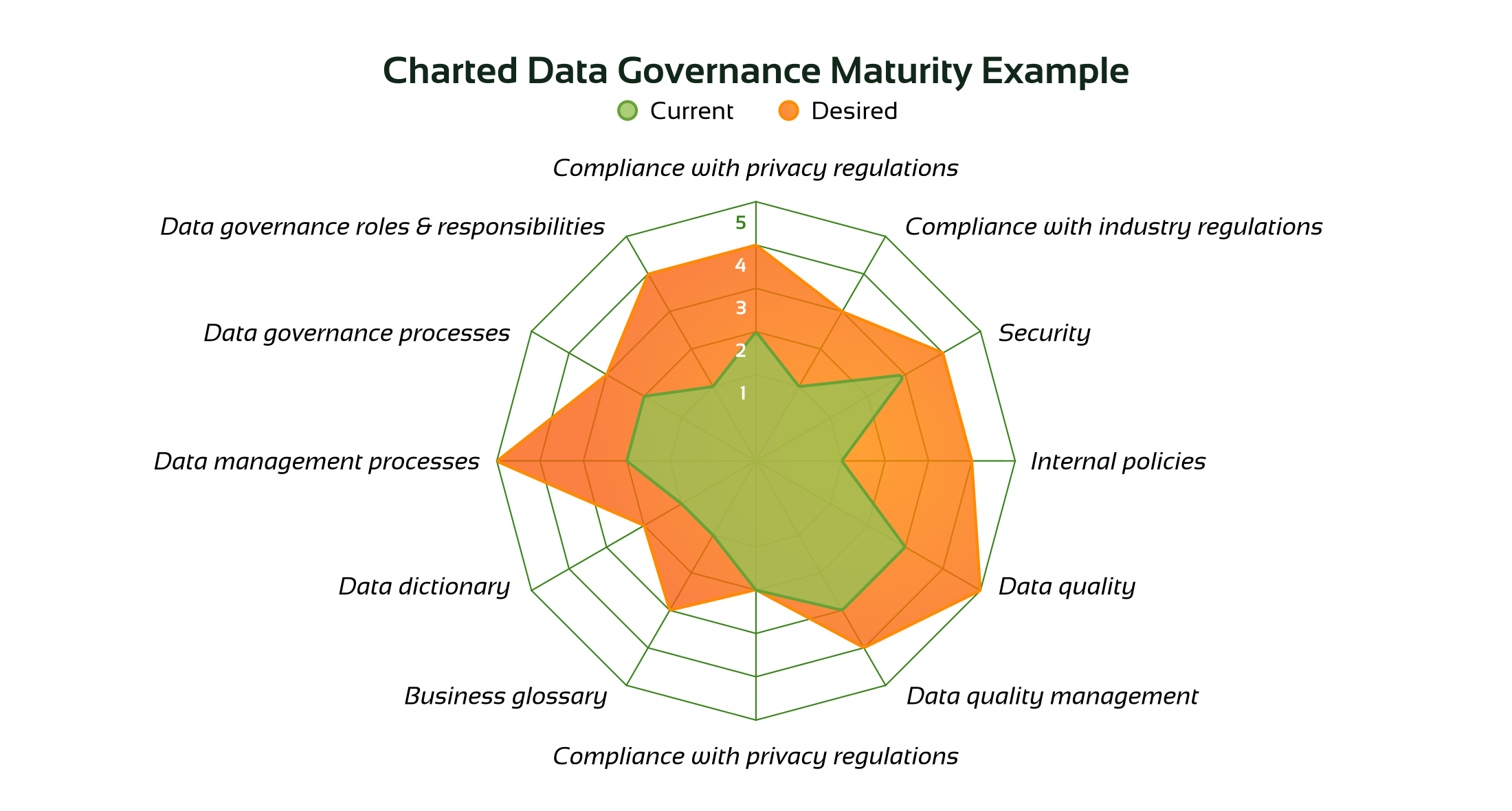
As part of our data governance solution, we provide a maturity scan in which we assess the current level of data governance within your organisation. We also define the desired level of governance in line with the data strategy of your organisation. With this input, a trajectory is defined to reach the desired level on both organisational and technical aspects of data governance.
Receive data insights, use cases and behind-the-scenes peeks once a month?
Sign up for our email list and stay 'up to data':