Understanding AI, GenAI, ML, and MLOps
What does it mean and how can you use it?
- Article
- Data Science
- Data Engineering
- AI


Artificial Intelligence (AI) is changing the way organisations operate, from personalised customer experiences to automated or assisted decision making, AI helps your organisation leverage your data. However, navigating through this fast-evolving field can feel overwhelming, with terms like AI, Generative AI (GenAI) & Machine Learning (ML) often causing confusion.
To make informed decision and strategic investments, it's critical to understand these concepts. So, in this article we will explain these concepts in a simplified way, omitting some deeper technicalities with the intent to make it easy to digest by a non-techie audience.
What is AI?
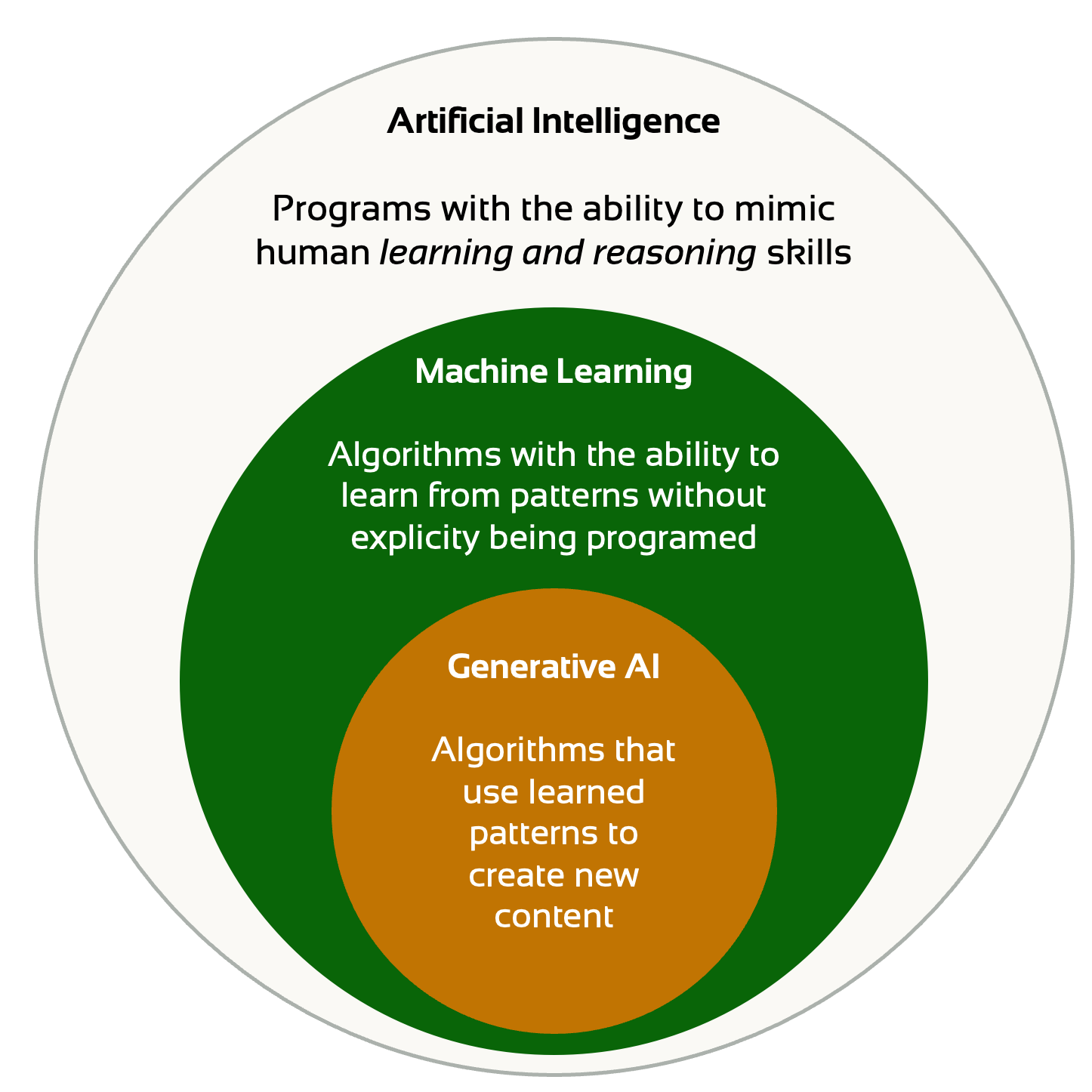
Artificial Intelligence is a branch of Computer Sciences that intends to create systems able to simulate human-like intelligence and problem-solving capabilities.
What is Machine Learning?
Machine Learning, commonly written as ML, is a branch of AI which uses statistics to learn patterns from historic data and use them to make predictions.
What is Generative AI?
Generative AI (GenAI) is sub field of Machine Learning which uses the patterns learnt on previous data to create new content like text, images and videos, fuelling innovations like chatbots, AI agents or AI-generated marketing material.
Below a visualisation about how AI, ML and GenAI relate to each other.
So then, what are AI agents?
AI agents (or 'Agentic AI') are systems that combine Generative AI with planning, memory and tool usage to complete tasks autonomously. They go beyond producing text or images, as they can take actions on behalf of you.
For example, OpenAI's recent announcement introduces a version of ChatGPT that acts as an AI agent capable of executing tasks like booking flights, managing emails, or pulling data from tools. All based on your prompts and context. It uses memory and APIs to reason through multi-step processes, not just reply to questions.
Aside from using AI agents for personal use, they can also be used in your organisation. Think of AI agents for customer service. These chatbots are agents with access to your customers’ data (orders, payments, service planning, etc) and can help solve most of customers’ questions around specific orders like cancelations, refunds, delivery dates replanning, and more.
What about MLOps?
While AI enables capabilities for innovation, its true potential can only be leverage through the lifecycle management of the ML applications. Machine Learning Operations (MLOps) acts as the operation backbone. It ensures that ML models are not only built, but also deployed, monitored and maintained in production environments. It helps deliver reliable, efficient and scalable AI solutions, taking traditional ML models developed in a notebook into value-driven outcomes.
Think of it like owning a restaurant.
Building an ML model is like designing your perfect menu for it in your home kitchen. You experiment with dishes, get feedback from a few friends and make some adjustments to it.
But just having the menu isn’t enough. You need a functioning restaurant that:
- Deploys those dishes consistently (trained chefs, ingredients on time, an actual restaurant)
- Monitors quality (taste, customer feedback)
- Scales operations when demand grows (more staff, more branches)
- Maintains hygiene, efficiency, and performance every day.
That’s what MLOps does for your ML projects. It ensures your brilliant “recipe” (model) delivers value at scale, reliably, and in alignment with the actual needs. For more information about MLOps, check our MLOps solution.
This article was written by Oscar Mike Claure Cabrera
Oscar Mike is a hands-on Data & ML Engineer with a background in engineering and software. He builds scalable, distributed systems with a focus on AI, MLOps, and modern Data Engineering tools, solving problems across industries like telecom, manufacturing, consumer goods, and financial services.
Receive data insights, use cases and behind-the-scenes peeks once a month?
Sign up for our email list and stay 'up to data':