Piano Academy 2026
Three developments shaping the future of digital analytics
- Article
- Technical Web Analytics
- Data Analytics
- AI
- Conversational Analytics
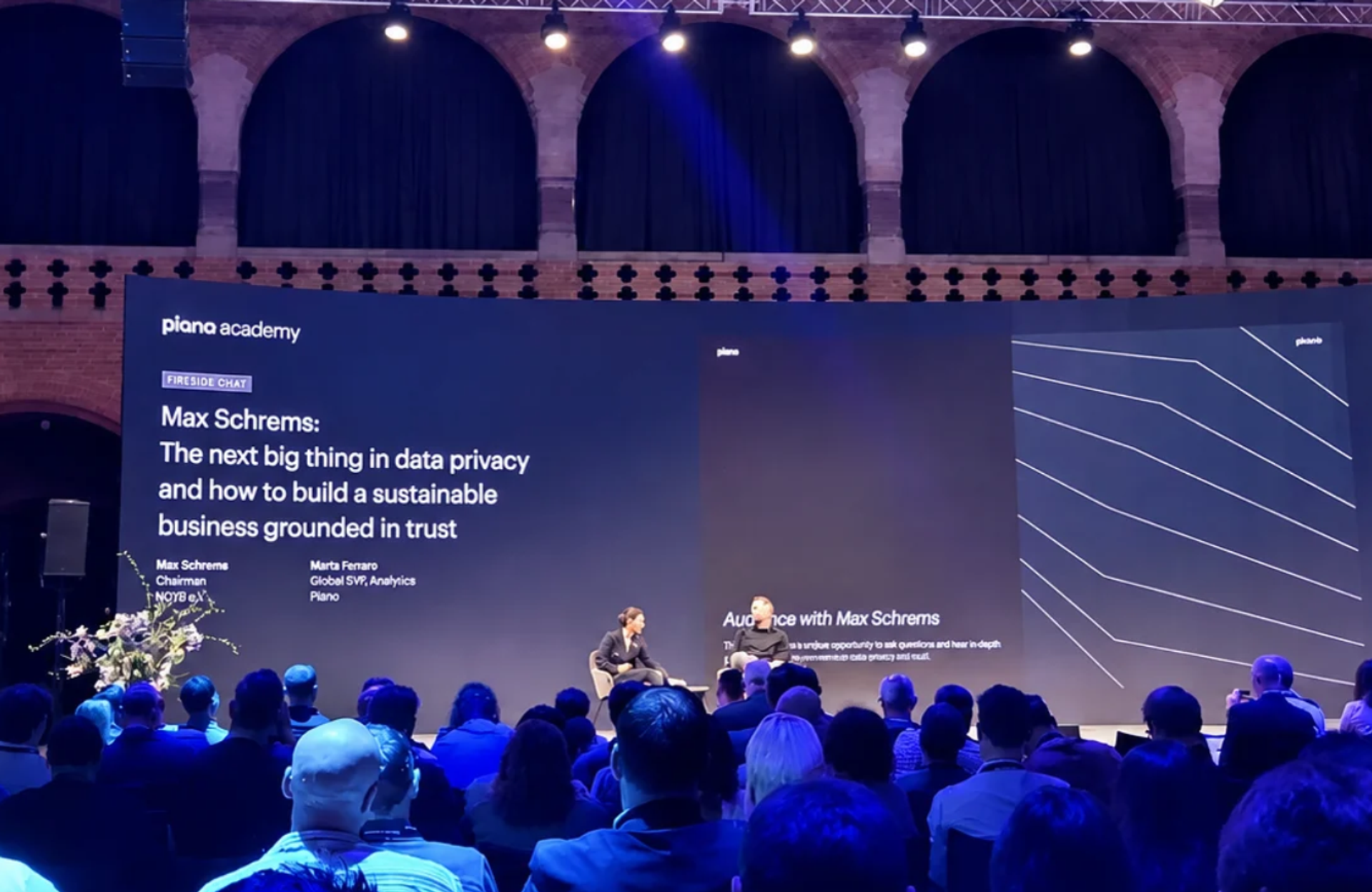

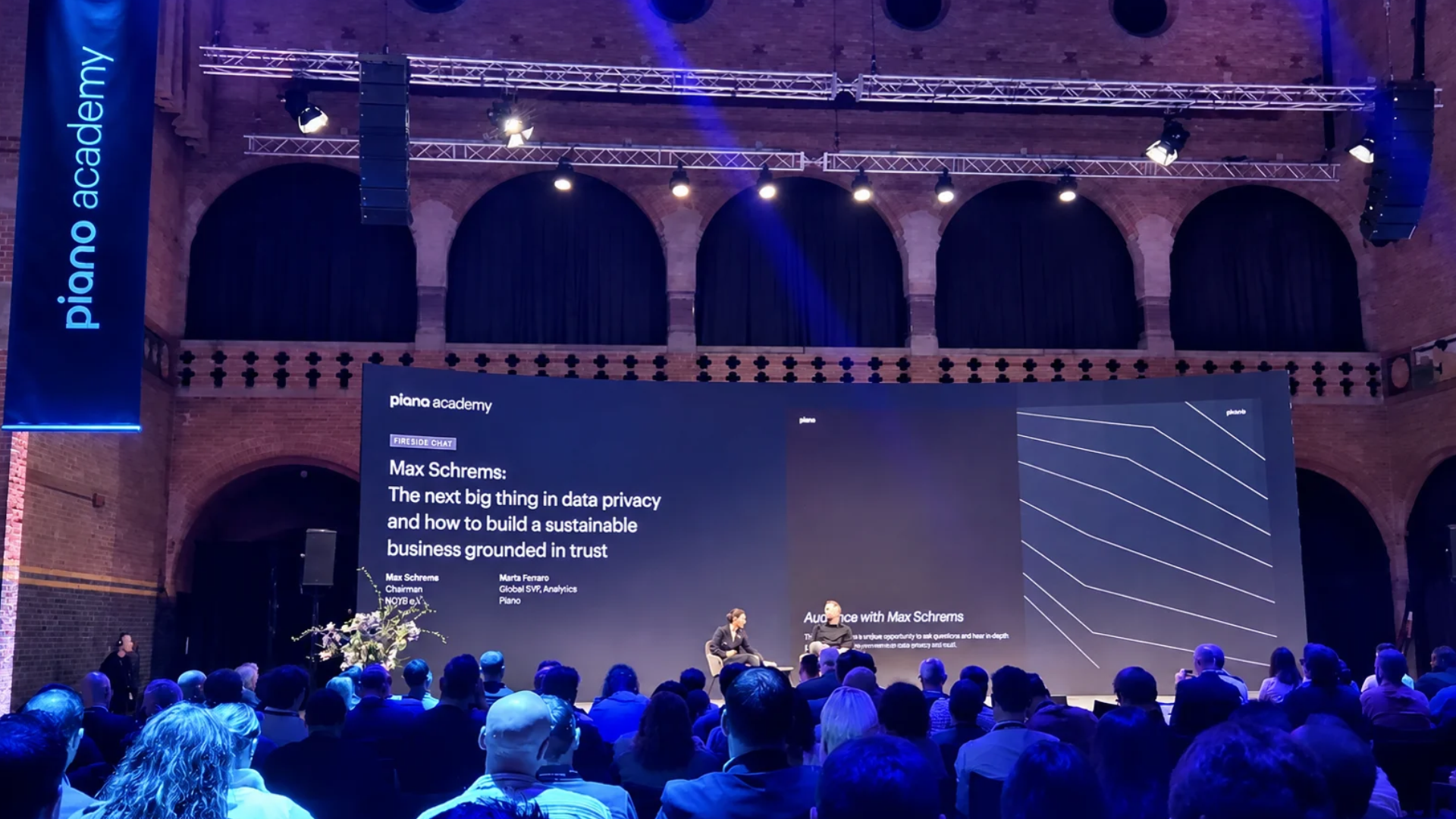
Piano is evolving from a digital analytics platform into an AI-driven analytics and activation platform. At Piano Academy 2026 in Amsterdam, we saw how conversational analytics, contextual data and AI integrations are making data more accessible and actionable across organisations.
For those less familiar with Piano, it is an analytics and digital experience platform that competes with solutions such as Google Analytics 4, Adobe Analytics and Matomo.
Combined with Piano's focus on privacy, compliance and continuous product development, the current developments make it an interesting option for organisations looking to get more value from their data.
1. Conversational analytics: Making data accessible to more people
One of the main themes at Piano Academy was conversational analytics. With this technology, users can ask questions about their data in natural language, without having to build reports manually.
Piano introduced Piano Chat, an AI assistant integrated into its product suite.
With Piano Chat, users can:
- Ask questions about analytics data in natural language.
- Generate reports and investigate trends.
- Explore possible explanations for anomalies in performance.
Piano also presented its plans for AI agents that continuously monitor data and proactively identify relevant insights. These agents could incorporate external information, such as weather conditions, economic developments or advertising performance, to provide additional context.
What does this mean for your organisation?
The main opportunity is to make analytics accessible beyond dedicated analyst teams. Business users can get answers to their questions more quickly, reducing their dependency on analysts for recurring requests.
This allows analysts to spend more time on complex questions while helping teams make better use of the data already available to them.
However, AI-generated answers still require careful interpretation. The accuracy of those answers depends on the quality of the data and the context available to the AI assistant.
2. Contextual data: Helping AI understand your business
The quality of AI-generated insights depends heavily on context. To provide useful answers, AI needs to understand what data represents and how it relates to the business.
Piano's new contextual data layer aims to address this challenge by making data definitions and additional sources available within the platform.
Developments presented at the Academy included:
- External data integrations: Connecting advertising data, including Meta Ads, with additional integrations such as Google Ads and Microsoft Ads on the roadmap.
- Standardised definitions: Enriching the analytics data model with explanations of standard events and parameters.
- Custom documentation: Allowing organisations to document their own tracking implementations and business definitions.
Why does context matter?
Suppose your revenue is lower than expected and you want to ask AI where the largest decline has occurred and why. To answer this question, AI needs to understand what revenue means within your organisation, which countries or regions you operate in, which campaigns you've been running and whether you've made any changes to your website.
This information can be added to a contextual data layer, helping AI interpret the data and provide more relevant answers. However, this context needs to be accurate and kept up to date. From our experience, consistent tracking, reliable data collection and clearly documented KPI definitions are essential, especially when AI starts interpreting data on behalf of business users.
3. MCP integrations: More flexibility in how you use analytics data
Piano also introduced its Model Context Protocol (MCP) server, allowing organisations to connect Piano Analytics with compatible AI tools such as Claude and ChatGPT.
MCP is a standard that allows AI applications to communicate with external systems and data sources. Through Piano's MCP integration, organisations can make analytics data accessible beyond Piano's own tools and interface.
How could organisations use this?
Some potential applications include:
- Business intelligence and reporting: Connect AI assistants to analytics platforms to query KPIs, generate dashboards and summarise business performance.
- Data exploration and SQL analytics: Enable AI assistants to query databases, execute SQL queries, analyse datasets and identify trends or anomalies.
- Predictive analytics and forecasting: Enable AI assistants to access historical data, run forecasting models, detect patterns and predict future outcomes.
For organisations already experimenting with AI, this flexibility can be particularly useful.
At the same time, connecting analytics data to external AI systems requires attention to privacy, access rights and governance. Organisations need to understand which data can be accessed and how their AI tools process that information.
Improvements to existing functionality
Although AI received most of the attention, Piano also announced improvements to existing product capabilities.
These included:
- Data Query: Updates to Piano's custom reporting functionality.
- Checkout funnel: Improvements to the checkout experience.
- Composer: Further development of Piano's experience and subscription management capabilities.
For existing customers, improvements to reporting and everyday workflows can be just as valuable as new AI features.
Our perspective: What makes Piano interesting?
At Digital Power, we help organisations evaluate and select analytics platforms based on their business requirements.
Recently, we conducted a platform selection project for a client in which Piano Analytics emerged as the best fit.
Several factors contributed to this decision:
- Strong analytics capabilities.
- A clear focus on privacy and compliance.
- A broad range of available integrations.
- Continuous investment in platform development.
Piano Academy 2026 reinforced our positive impression of the platform's direction. In particular, the developments around AI and contextual data show how Piano is working to make analytics more accessible and useful across organisations.
Is Piano right for your organisation?
The right analytics platform depends on your requirements, digital maturity and use cases. Based on our experience, Piano is particularly interesting if your organisation:
- Has strong requirements around privacy and compliance.
- Wants to make analytics more accessible beyond dedicated analyst teams.
- Needs flexibility to integrate analytics data with other tools.
- Values continuous improvement and product innovation.
Are you evaluating analytics platforms or looking to get more value from your data?
At Digital Power, we help organisations select, implement and improve analytics solutions that match their business needs. We'd be happy to share our experience with Piano and explore whether it could be a good fit for your organisation.
This is an article by Bart Minten
Bart has been working at Digital Power since 2016 as a Technical Web Analyst. He has a background in marketing with expertise in data management, web analytics, and data analysis. With a strong foundation in both the technical and commercial sides of data, Bart bridges the gap between business goals and data capabilities.
Receive data insights, practical cases and a look behind the scenes once a month?
Sign up to our mailing list and stay 'up to data':