Conversational analytics in practice: Coolgreen demo
What if you could analyse your business data simply by asking a question?
- Article
- Conversational Analytics
- Data Analytics
- Data Engineering
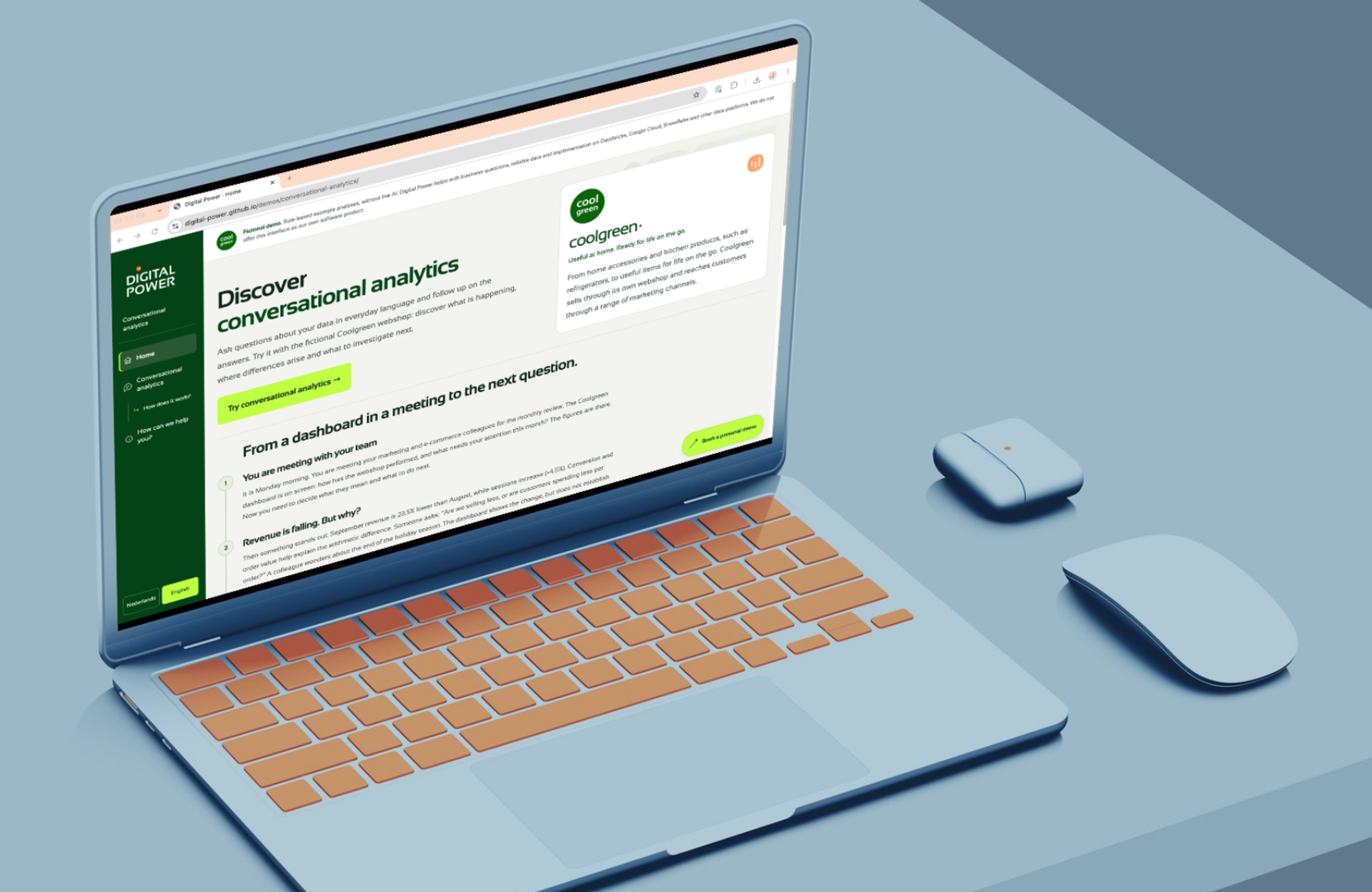

Conversational analytics makes data accessible to everyone, without the need to perform complex analyses or navigate multiple dashboards.
To demonstrate how this could work in practice, we developed an interactive demo featuring Coolgreen, a fictional organisation. Through example questions and analyses, discover how conversational analytics can help you gain insights from data faster and turn them into better decisions.
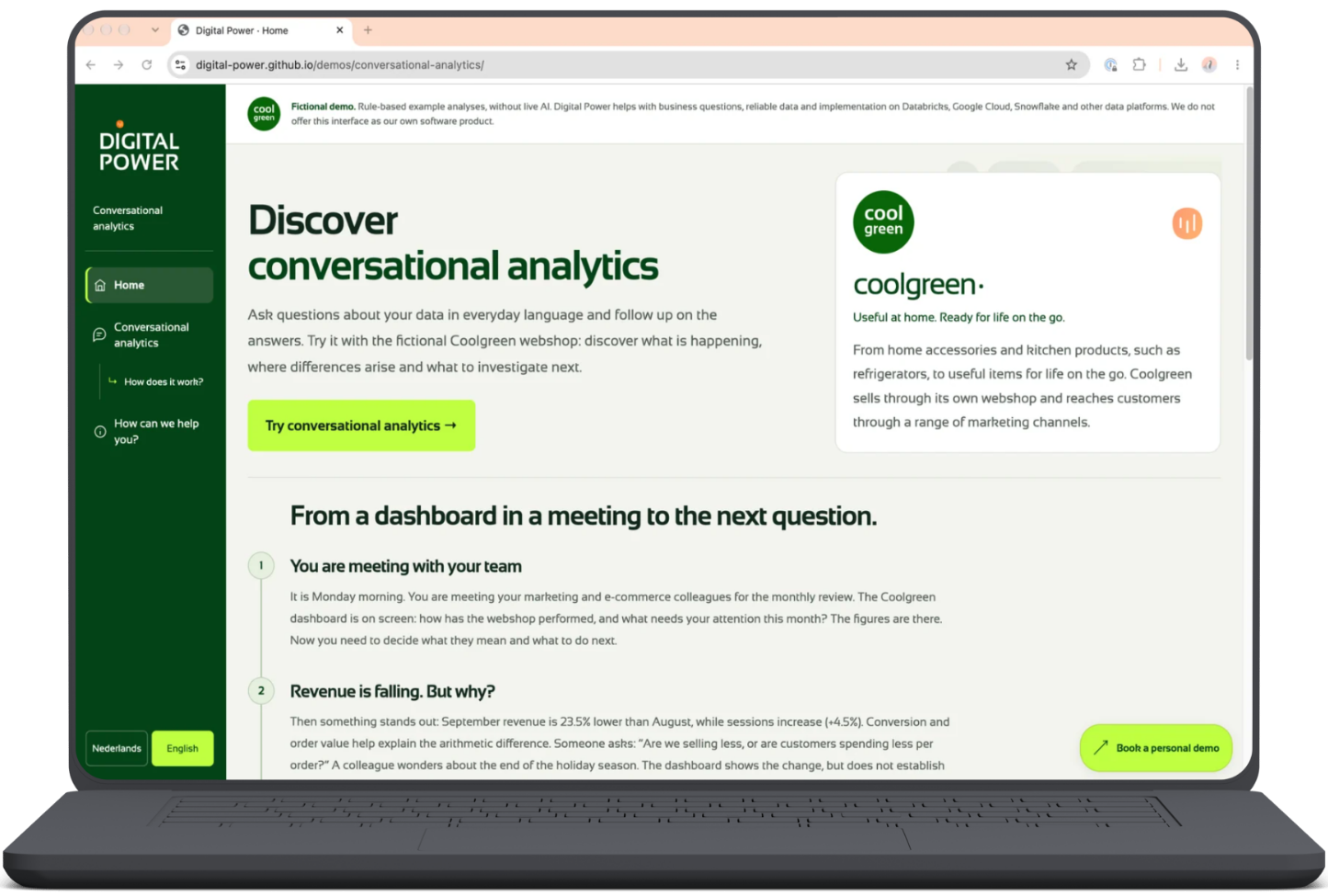
The demo gives you an impression of what a conversation with your data could look like. The analyses are predefined and do not use live AI, but illustrate the possibilities of conversational analytics.
Curious about what this could mean for your organisation? Explore the demo, get inspired and discover which questions you would like to ask your own data.
Learn more about conversational analytics
Want to know what conversational analytics can do for your organisation and how we apply it in practice? Read more about our solution:
- How it works and what it can mean for your organisation.
- The importance of data quality, governance and security.
- Our step-by-step approach to implementation.
- How we apply conversational analytics in practice.
Read more about Conversational Analytics or schedule a personal demo directly.

Want to know more?
Reimer will be happy to talk to you about what we can do for you and your organisation as a data & AI partner.
Commercieel Manager Data Analytics+31(0)20 308 43 90+31(0)6 83 69 07 78reimer.vandepol@digital-power.com
Make a well-informed decision
Dive into the answers to the most asked questions about Conversational Analytics with Digital Power as your data & AI partner.
Contact usReceive data insights, use cases and behind-the-scenes peeks once a month?
Sign up for our email list and stay 'up to data':